
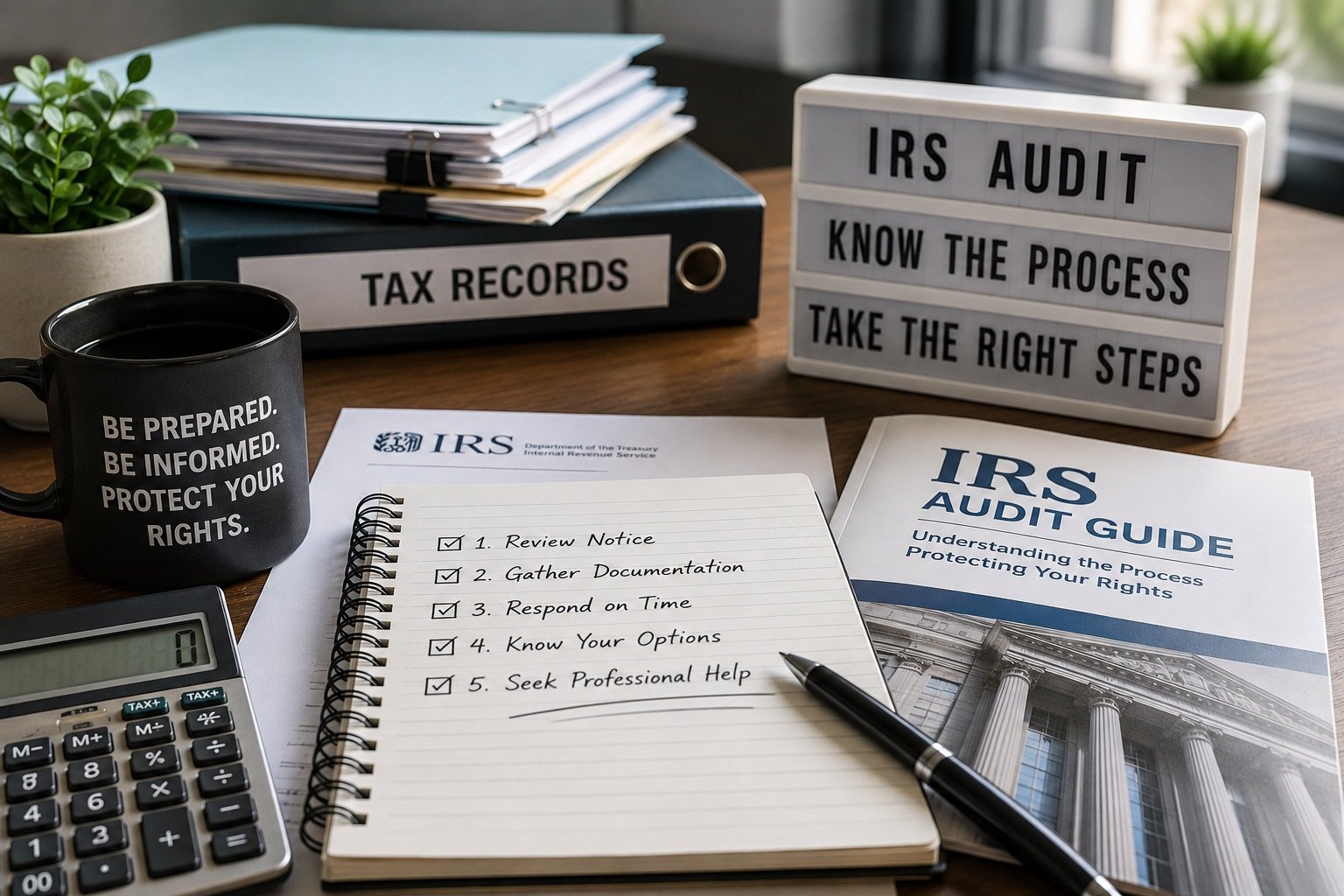
Receiving a letter from the IRS stating that your tax return has been selected for audit can be stressful. However, an audit does not automatically mean you did something wrong or that you will owe additional taxes.
Understanding what an IRS audit is and how to respond can help you protect your rights and avoid unnecessary complications.
What Is an IRS Audit?
An IRS audit is a review of your tax return to verify that the information you reported is accurate and supported by documentation.
The IRS may request additional information about:
• Income reported
• Business expenses
• Tax deductions
• Tax credits
• Investments or property transactions
Many audits are completed simply by providing the requested records.
Why Was My Return Selected?
Tax returns may be selected for several reasons.
Examples include:
• Mathematical inconsistencies
• Missing income reported by third parties
• Large or unusual deductions
• Random statistical selection
• Related audits involving other taxpayers or businesses
Selection for an audit does not necessarily indicate fraud.
Types of IRS Audits
The IRS generally conducts three types of audits.
Correspondence Audit
The most common type.
The IRS requests documentation by mail to verify specific items on your return.
Office Audit
You meet with an IRS representative at a local IRS office and provide supporting records.
Field Audit
The IRS visits your home, business, or accountant’s office to conduct a more detailed examination.
Field audits are generally more comprehensive and often involve larger or more complex tax issues.
What Should You Do After Receiving an Audit Notice?
If you receive an IRS audit notice:
• Read the notice carefully
• Respond by the stated deadline
• Gather the requested documentation
• Avoid sending unnecessary records that were not requested
• Consider professional representation if the audit is complex
Ignoring an audit notice can lead to additional tax assessments and collection actions.
Can a Tax Professional Represent Me?
Yes.
Many taxpayers choose professional representation during an IRS audit.
A qualified tax professional can:
• Review the IRS request
• Organize supporting documentation
• Communicate directly with the IRS
• Help protect your rights throughout the audit process
Professional representation can often reduce stress and help ensure that the audit proceeds efficiently.
What Happens If the IRS Determines I Owe More?
If the audit results in additional tax owed, you may still have options.
Depending on your circumstances, you may qualify for:
• Installment Agreements
• Penalty Relief
• Offer in Compromise
The important thing is to address the issue promptly rather than ignoring the outcome.
Professional Guidance Can Help
IRS audits can feel intimidating, but many are resolved successfully with proper documentation and timely responses.
If you have received an IRS audit notice or owe more than $10,000 to the IRS, Tax Relief Systems LLC can help you understand your options and communicate with the IRS on your behalf.
Tax Relief Systems LLC
Phone: (877) 807-3133
Schedule a consultation:
https://taxreliefsystemsllc.com/schedule-a-consultation/
Email:
info@taxreliefsystemsllc.com