
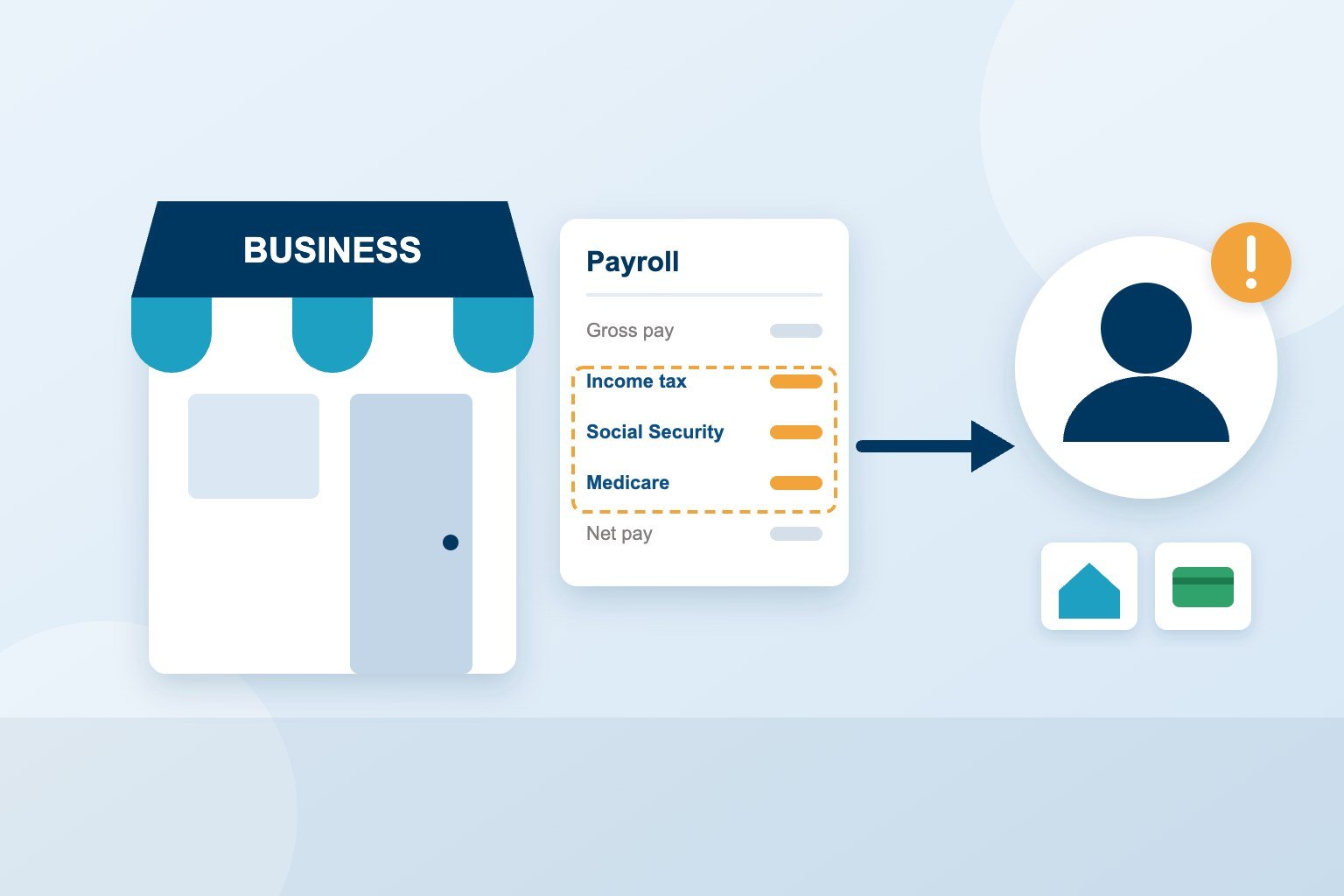
Short answer: The Trust Fund Recovery Penalty (TFRP) lets the IRS hold individuals personally liable for a business’s unpaid trust fund taxes, which are the income taxes and the employee share of Social Security and Medicare taxes withheld from employee paychecks. The penalty equals the unpaid trust fund amount, and once it is assessed, the IRS can pursue the responsible person’s personal assets.
For business owners and managers, this is one of the most serious IRS problems because it can follow you personally even if the business is struggling or closed. Here is how the TFRP works and what to do if you are facing it.
What Are Trust Fund Taxes?
When a business withholds federal income tax and the employee’s portion of FICA taxes from paychecks, that money belongs to the employees and the government. The IRS explains that these are called trust fund taxes because the employer holds the employee’s money in trust until it is paid to the IRS.
If the business uses that money for rent, suppliers or other bills instead of depositing it, the unpaid amount can become the basis for the TFRP.
How Much Is the Trust Fund Recovery Penalty?
According to the IRS’s Trust Fund Recovery Penalty guidance, the penalty equals the unpaid balance of the trust fund tax. That includes the unpaid income tax withheld plus the employee’s portion of withheld FICA taxes. The IRS also notes that the business does not have to stop operating for the TFRP to be assessed.
Who Can Be Held Personally Liable?
The IRS can assess the TFRP against any person who is responsible for collecting or paying withheld income and employment taxes and who willfully fails to collect or pay them. A responsible person has the duty and power to direct the collecting, accounting and paying of trust fund taxes. The IRS lists examples such as:
- An officer or employee of a corporation
- A member or employee of a partnership
- A corporate director or shareholder
- A member of a board of trustees of a nonprofit organization
- Payroll service providers or professional employer organizations, or responsible parties within them
- Another person with authority and control over funds to direct their disbursement
The IRS also notes that an employee whose only role is paying bills as directed by a superior is generally not considered a responsible person.
What Does “Willful” Mean?
Willfulness does not require bad intent. The IRS says a person acts willfully if they were, or should have been, aware of the outstanding taxes and either intentionally disregarded the law or were plainly indifferent to its requirements. The IRS also points out that paying other creditors with available funds while employment taxes go unpaid is an indication of willfulness.
How the IRS Assesses and Collects the TFRP
- Investigation. The IRS may ask potentially responsible people to complete an interview about their duties in the business.
- Proposal letter. If the IRS decides to pursue you, it sends a letter stating that it plans to assess the TFRP against you.
- Appeal window. You generally have 60 days from the date of the letter (75 days if it is addressed outside the United States) to appeal the proposed assessment.
- Assessment and demand. If you don’t respond, the IRS assesses the penalty and sends a Notice and Demand for Payment.
- Collection. Once the penalty is asserted, the IRS can take collection action against your personal assets, such as filing a federal tax lien or a levy.
That 60-day window matters. It is often the best opportunity to present facts about your role before the penalty becomes a personal assessment.
How to Reduce the Risk
The IRS’s guidance is direct: make sure all employment taxes are collected, accounted for and paid on time, and make your tax deposits when required. If your business is already behind, addressing the payroll tax balance early, before the IRS begins a TFRP investigation, can keep more options open. Unresolved payroll taxes can also put the business itself at risk, as we explain in Can the IRS Shut Down My Business?.
What to Do Next
- Gather your payroll records, Forms 941 and deposit history for the periods involved.
- Make current payroll deposits on time so the problem does not grow.
- If you receive a letter proposing the TFRP, note the date and the appeal deadline right away.
- Do not complete an IRS interview or sign forms without understanding how your answers may affect personal liability.
- Get a professional review of both the business balance and any personal exposure.
Frequently Asked Questions
Can the IRS come after me personally for my company’s payroll taxes?
Yes. If the IRS determines you are a responsible person who willfully failed to collect or pay trust fund taxes, it can assess the Trust Fund Recovery Penalty against you personally and collect it from your personal assets.
Does closing the business make the TFRP go away?
No. The IRS states that the business does not have to stop operating for the TFRP to be assessed, and closing the business does not by itself remove responsible persons’ exposure.
Can more than one person be held responsible?
Yes. The IRS’s definition of a responsible person is broad and can include officers, partners, directors, shareholders and others with authority over the business’s funds.
How long do I have to appeal a proposed TFRP?
The IRS generally allows 60 days from the date of its letter, or 75 days if the letter is addressed outside the United States. Your appeal rights are explained in the letter.
Can I set up a payment plan for the TFRP?
Payment arrangements such as an IRS installment agreement may be available, depending on your situation. A review of your finances can show which options fit.
Talk to an Enrolled Agent About Payroll Tax Problems
Payroll tax debt and the Trust Fund Recovery Penalty are areas where timing and details matter. Tax Relief Systems’ Enrolled Agents have helped business owners and individuals across all 50 states since 2009. If you owe $10,000 or more, schedule your free, confidential consultation to understand your options.