
If you owe money to the IRS, you’ve probably seen advertisements promising to settle your tax debt for pennies on the dollar or eliminate your IRS problems overnight.
While legitimate tax relief companies do exist, there are also companies that make unrealistic promises and charge significant fees without delivering meaningful results.
Knowing how to identify a reputable tax relief company can help you avoid costly mistakes.
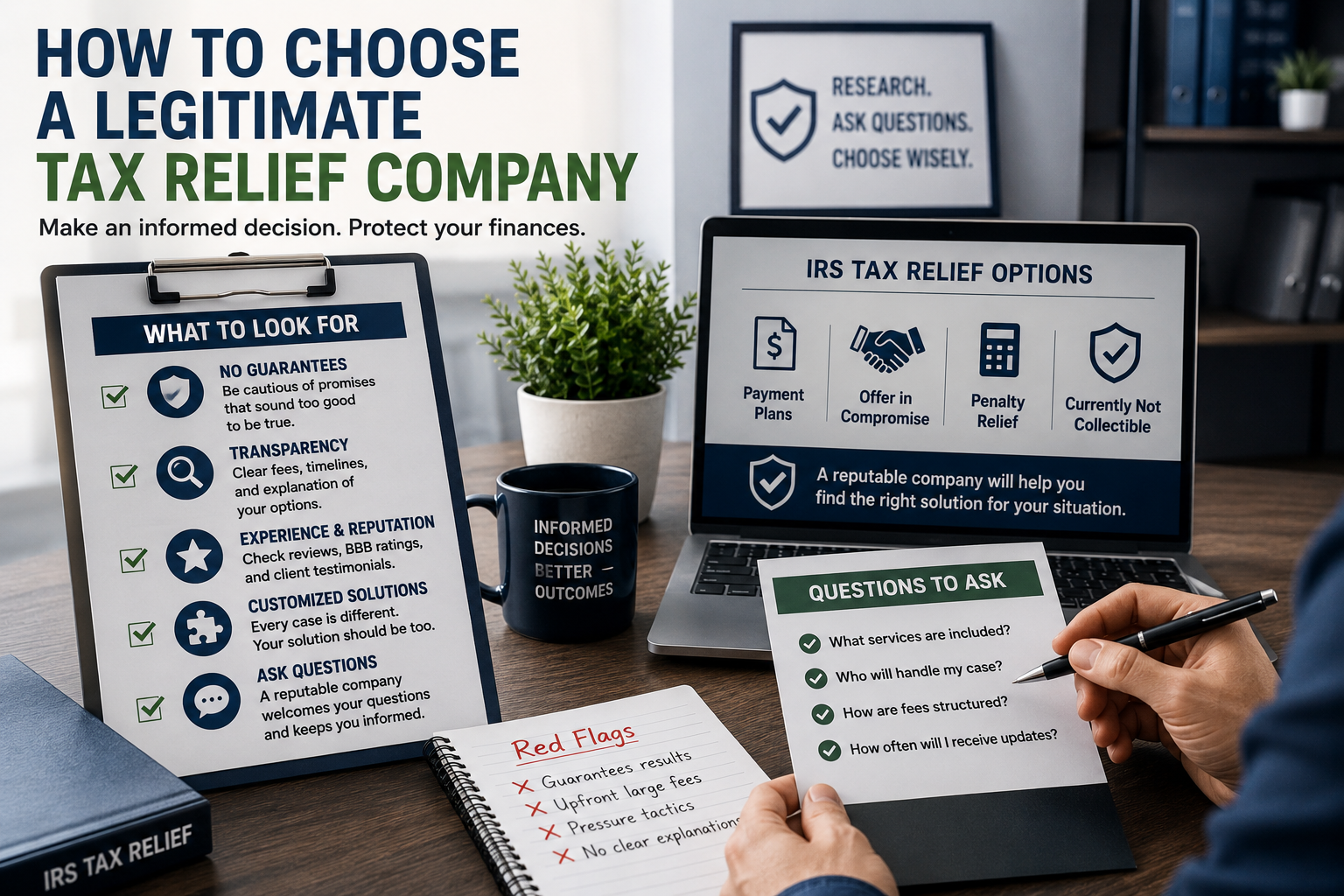
Be Cautious of Guaranteed Results
No tax relief company can guarantee a specific outcome before reviewing your financial situation.
Programs such as an Offer in Compromise depend on many factors, including:
• Income
• Assets
• Expenses
• Tax filing history
• Ability to pay
If a company guarantees that your debt will be settled for a specific amount before conducting a thorough review, that should be considered a red flag.
Look for Transparency
A reputable tax relief company should clearly explain:
• Available resolution options
• Potential costs and fees
• Expected timelines
• Advantages and disadvantages of each program
Be cautious of companies that pressure you into signing agreements before fully explaining your options.
Understand That Every Case Is Different
There is no one-size-fits-all solution for IRS tax debt.
Some taxpayers may qualify for:
• Installment Agreements
• Offer in Compromise
• Penalty Relief
• Currently Not Collectible status
Others may require a different approach based on their financial situation.
A legitimate company will recommend the solution that best fits your circumstances rather than pushing a single program.
Check Reviews and Reputation
Before hiring any tax relief company, take time to review:
• Google reviews
• Better Business Bureau ratings
• Client testimonials
• Online reputation
Consistent positive feedback and a strong professional reputation can provide valuable insight into how a company treats its clients.
Ask Questions
A reputable company should welcome your questions.
Consider asking:
• What services are included?
• Who will handle my case?
• How often will I receive updates?
• What resolution options may apply to my situation?
Clear answers and open communication are good signs.
Beware of Fear-Based Sales Tactics
Tax debt can be stressful, but pressure tactics should never replace honest advice.
Be cautious if a company:
• Uses scare tactics to rush decisions
• Demands large upfront fees without explaining services
• Makes promises that sound too good to be true
Professional tax relief should be based on facts, not fear.
Why Professional Representation Matters
The IRS has numerous programs available to help taxpayers resolve debt, but understanding which option is appropriate can be challenging.
A qualified tax relief professional can evaluate your circumstances, communicate with the IRS, and help determine the most appropriate path toward resolution.
The goal should always be finding the solution that best fits your financial reality.
Check Credentials Before You Hire
Only three types of tax professionals have unlimited rights to represent taxpayers before the IRS: Enrolled Agents, CPAs and attorneys. Ask who will actually work on your case and what credentials they hold.
- Enrolled Agents are federally licensed by the IRS and specialize in taxation.
- CPAs are licensed by a state board of accountancy, where you can verify the license.
- Attorneys are licensed by a state bar.
The IRS also publishes a searchable directory of federal tax return preparers with credentials, which lists Enrolled Agents, CPAs and attorneys.
Understand How Fees Work
Many tax resolution firms charge in stages: first an investigation to pull your IRS records and review your finances, then a fee for the resolution itself. Ask for the fees and the scope of work in writing before you sign, and ask what happens if the IRS does not accept the proposed resolution.
Know What You Can Do Yourself
A good tax relief company will be honest about simple cases. For example, many individuals who owe $50,000 or less in combined tax, penalties and interest can apply for a long-term payment plan directly with the IRS online. Professional help adds the most value when your case is complex, enforcement has started, or you want to pursue options like an Offer in Compromise.
Red Flags of Tax Relief Scams
- Promises to settle your debt for “pennies on the dollar” before reviewing your finances
- Pressure to sign immediately or pay large fees before any explanation of services
- Requests to send your tax payments to the company instead of directly to the U.S. Treasury
- Anyone claiming to be from the IRS who contacts you first by phone, text or social media and demands immediate payment
Frequently Asked Questions
Will a tax relief company need my IRS power of attorney?
Yes. A legitimate representative will ask you to sign IRS Form 2848, which authorizes them to speak with the IRS on your behalf and see your account records.
How long does tax resolution take?
It depends on the solution. A payment plan can sometimes be set up quickly, while an Offer in Compromise often takes many months for the IRS to review.
How do I know Tax Relief Systems is legitimate?
Tax Relief Systems has been in business since 2009, is BBB accredited with an A+ rating, and is staffed by Enrolled Agents. You can learn more about our team or read client testimonials.
Get Help From Tax Relief Systems
If you are researching tax relief companies and want honest guidance regarding your options, we are here to help.
If you owe more than $10,000 to the IRS and would like a professional evaluation of your situation, contact us today.
Tax Relief Systems LLC
Phone: (877) 807-3133
Schedule a consultation:
https://taxreliefsystemsllc.com/schedule-a-consultation/
Email:
info@taxreliefsystemsllc.com