
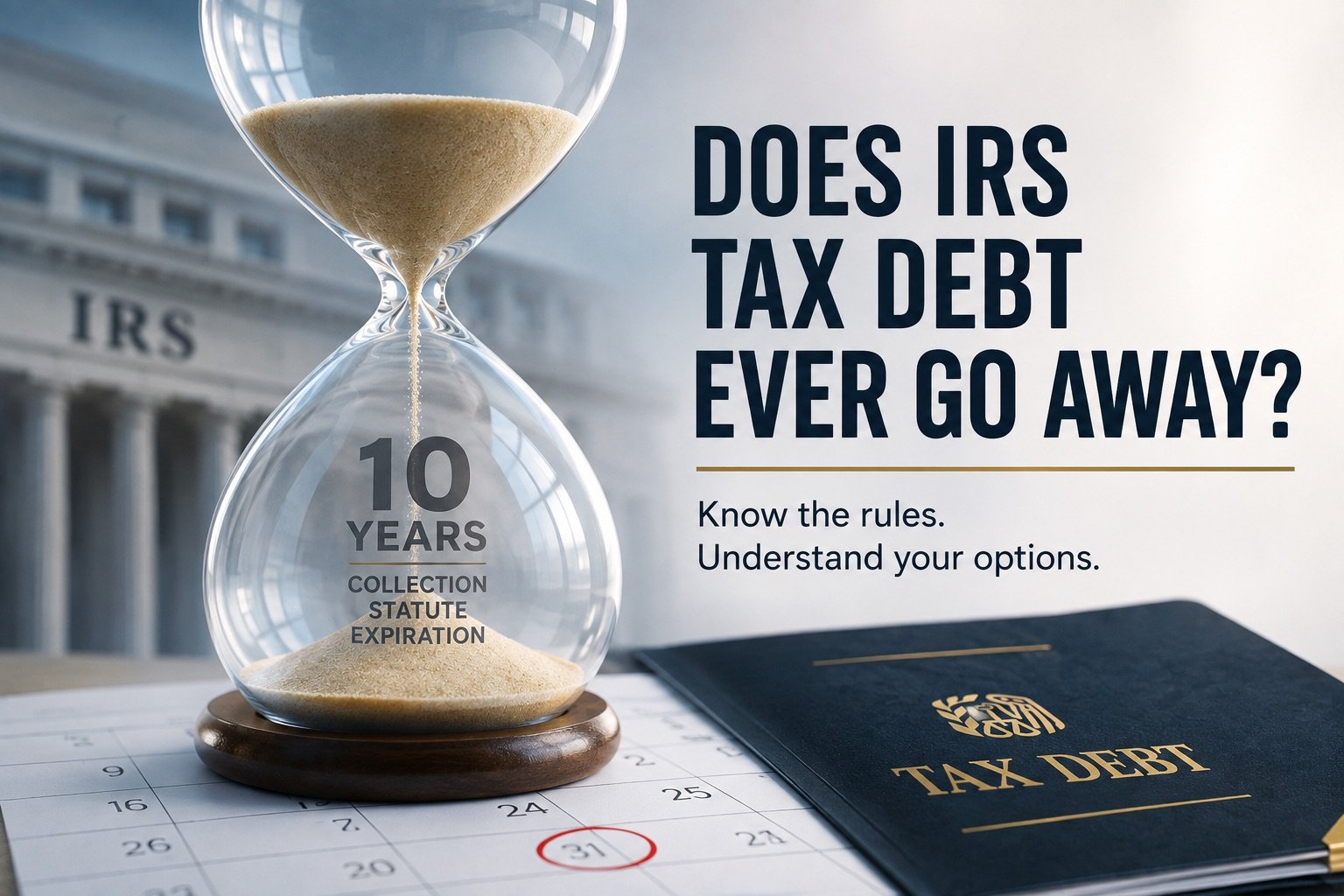
If you’ve owed taxes for several years, you may have heard that the IRS can only collect for a certain amount of time. While there is some truth to that, many taxpayers misunderstand how these rules work.
Waiting and hoping your tax debt simply disappears can often make your situation worse.
Here’s what you should know.
Does the IRS Have a Time Limit to Collect?
Yes.
In most cases, the IRS has 10 years to collect a tax debt after it has been officially assessed.
This period is known as the Collection Statute Expiration Date (CSED).
However, determining when that period starts and whether it has been extended can be more complicated than many people realize.
What Can Extend the Collection Period?
Certain actions may pause or extend the collection statute, including:
• Filing for bankruptcy
• Requesting certain IRS appeals
• Living outside the United States for extended periods
• Some installment agreement requests
• Other situations recognized under federal tax law
Every taxpayer’s timeline is different.
Does Ignoring the IRS Help?
No.
Ignoring IRS notices does not stop penalties, interest, or collection activity.
In fact, the IRS may continue taking actions such as:
• Filing federal tax liens
• Levying bank accounts
• Garnishing wages
The longer the issue remains unresolved, the fewer options you may have.
What Happens When the Collection Period Ends?
If the collection statute expires before the IRS collects the balance, the remaining debt is generally no longer legally collectible.
However, relying on the expiration date without understanding your specific circumstances can be risky.
Many taxpayers incorrectly calculate the collection period and discover too late that additional time had been added.
Should You Wait for the Statute to Expire?
Usually not.
For many taxpayers, waiting means:
• More penalties and interest
• More collection activity
• Greater financial stress
In many situations, resolving the tax debt earlier provides greater peace of mind and may cost less in the long run.
Professional Guidance Can Help
Understanding the IRS collection statute requires careful review of your tax history and any events that may have affected the collection period.
A tax relief professional can evaluate your situation, explain your available options, and determine whether a resolution program may be more beneficial than simply waiting.
Can Tax Debt Be Wiped Out in Bankruptcy?
Some older income tax debts can be discharged in bankruptcy, but only when specific timing rules are met. In general, the return must have been due more than three years before the bankruptcy filing, filed more than two years before, and assessed more than 240 days before, with no fraud or willful evasion involved.
Payroll taxes withheld from employees (trust fund taxes) and recent income taxes usually cannot be discharged. Because the rules are technical, this is a question for a bankruptcy attorney working alongside your tax professional.
What About Penalties and Interest?
Penalties do not disappear on their own, but they can often be reduced. Penalty abatement through First-Time Abatement or reasonable cause can remove failure-to-file and failure-to-pay penalties, along with the interest charged on those penalties. Interest on the tax itself is generally not removable.
How to Find Out When Your Debt Expires
Each tax year has its own collection expiration date, and an audit or amended return can create a second assessment with a different date. The starting point is your IRS account transcripts, which you can view in your IRS Online Account.
A tax professional reads the transaction codes on those transcripts to find the assessment dates and any events that paused the clock. Our article on how long the IRS can collect back taxes explains which events extend the deadline.
Frequently Asked Questions
Does tax debt from unfiled returns ever expire?
No. The 10-year collection clock only starts once a tax is assessed. If a return is never filed, the IRS can prepare a substitute return and assess the tax years later, and the clock starts then. Filing your returns is what starts the countdown.
Can the IRS ask me to extend the 10-year period?
In limited cases, yes. The IRS may ask you to sign a collection waiver (Form 900) in connection with certain installment agreements. Read any waiver carefully and get advice before signing.
Does Currently Not Collectible status count toward the 10 years?
Yes. The collection clock keeps running while your account is in Currently Not Collectible status. If your finances do not improve, part or all of the balance may expire before the IRS collects it.
Get Help From Tax Relief Systems
If you owe more than $10,000 to the IRS or have questions about older tax debt, Tax Relief Systems LLC is here to help.
Tax Relief Systems LLC
📞 (877) 807-3133
Schedule a free consultation:
https://taxreliefsystemsllc.com/schedule-a-consultation/
📧 info@taxreliefsystemsllc.com