
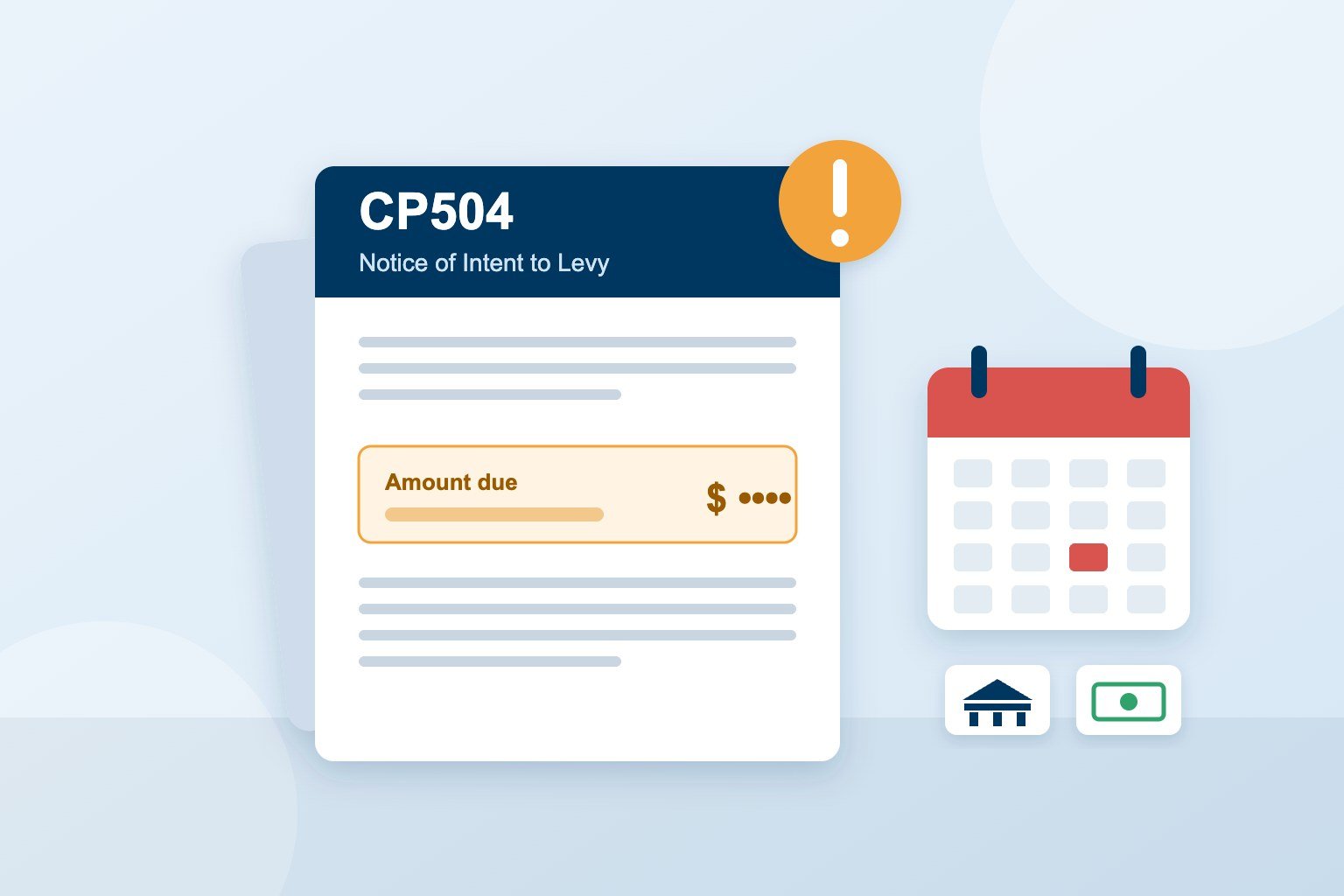
Short answer: A CP504 is the IRS’s Notice of Intent to Levy under Internal Revenue Code section 6331(d). It means the IRS has not received payment of your unpaid balance and intends to levy your wages, bank accounts or state tax refund if you don’t pay or make arrangements. It is serious, but you still have options if you act quickly.
Many people open a CP504 after months of earlier IRS letters. Here is what the notice means, what the IRS can do next, and the steps that can help you protect your income and accounts.
What Is an IRS CP504 Notice?
The IRS sends a CP504 when an unpaid balance remains after earlier billing notices. On its CP504 information page, the IRS describes the letter as your Notice of Intent to Levy and calls it a final reminder that it intends to levy your wages, bank accounts or state tax refund.
The notice shows the amount you owe, including tax, penalties and interest, and asks you to pay immediately. Interest and some penalties keep growing until the balance is paid, so the amount on the notice may increase over time.
What Can the IRS Do After a CP504?
According to the IRS, if you don’t pay the amount due, it can levy your income and bank accounts and seize property or rights to property, including your state income tax refund. The IRS also says it may begin searching for other assets on which to issue a levy. Property the IRS lists includes:
- Wages, real estate commissions and other income
- Bank accounts
- Business assets
- Personal assets, including your car and home
- Social Security benefits
The IRS also notes that it can file a Notice of Federal Tax Lien if it hasn’t already, and that seriously delinquent tax debt can affect your U.S. passport.
Is a CP504 the Last Notice Before a Levy?
The CP504 allows the IRS to levy a state tax refund. For many other types of property, the IRS explains that it may send a notice giving you the right to a hearing before the IRS Independent Office of Appeals, if you haven’t already received one, and can then levy or take your other property. In other words, the CP504 is a strong warning, and the window to respond on your own terms is getting shorter.
If you have already received other collection letters, our guide on what happens if you ignore IRS letters explains how the process usually builds over time, and our IRS notices explained page covers other common letters.
Your Options After Receiving a CP504
The IRS lists several ways to respond:
- Pay in full. If you can, paying the balance stops further interest and penalties on that debt.
- Set up a payment plan. If you can’t pay everything, the IRS says to pay what you can now and contact it to see if you qualify for a payment plan, such as an installment agreement.
- Dispute the balance. If you disagree with the amount, the IRS says to call the toll-free number on your notice.
- Request a collection appeal. The IRS says you can request an appeal under the Collection Appeals Program before collection action takes place by following the instructions on your notice.
If a payment plan makes sense, the IRS describes its online payment agreement tool as the fastest way to get an installment agreement approved. Its Publication 594, The IRS Collection Process, also explains each stage of collection in more detail.
Depending on your finances, other options may also be worth reviewing, such as an Offer in Compromise, Currently Not Collectible status or penalty abatement. The right choice depends on your income, expenses, assets and filing history.
What Not to Do
- Don’t ignore the notice. The IRS treats a CP504 as a final reminder before levy action.
- Don’t assume the balance will stay the same. Interest and penalties continue to accrue.
- Don’t wait until a levy hits your paycheck or bank account to act. Releasing a bank levy or wage garnishment is usually harder than preventing one.
What to Do Next
- Read the notice carefully and note the date, the tax years and the amount due.
- Gather any other IRS letters you have received for the same years.
- Make sure all required tax returns are filed, since unfiled returns can limit your options.
- Decide whether you can pay in full, need a payment plan, or need a broader resolution.
- Contact the IRS or a qualified representative as soon as possible, before levy action begins.
Frequently Asked Questions
How long do I have to respond to a CP504?
The IRS asks you to pay the amount due immediately. Because the notice warns of levy action, it is best to respond as soon as you receive it rather than waiting for a specific deadline.
Can the IRS take my paycheck after a CP504?
The IRS lists wages among the property it can levy. It also explains that it may send a notice of your right to a hearing with the Independent Office of Appeals before levying other property, if you have not already received one. Acting early gives you more control over the outcome.
Will a payment plan stop a CP504 levy?
Setting up a payment plan is one of the responses the IRS recommends if you can’t pay in full. Contacting the IRS promptly to arrange a plan is generally the best way to avoid escalating collection action.
What if I don’t agree with the amount on my CP504?
The IRS says to call the toll-free number on your notice if you disagree. Have your records and any earlier notices ready when you call.
Can someone help me respond to a CP504?
Yes. Tax Relief Systems’ team of Enrolled Agents helps taxpayers in all 50 states respond to IRS collection notices, including requests for wage garnishment release and payment arrangements.
Get Help Before the IRS Takes Action
A CP504 is a signal to act now. If you owe $10,000 or more, our Enrolled Agents can review your notice, explain your options and help you choose a path that fits your situation. Since 2009, we have helped more than 5,780 clients with IRS problems. Schedule your free, confidential consultation today.